

What Are the Common Signs and Symptoms of Gum Disease?
If you have noticed that your gums are more sensitive than usual, you might be experiencing the early stages of gum disease. Common signs that you need to see a gum disease specialist include bleeding gums while brushing or flossing, persistent bad breath, receding gums, swollen or red gums, and loose teeth. If left untreated, gum disease can lead to tooth loss and other serious oral health issues. Dr. Victoria Vuong, DDS, at Selective Dental provides proper care to help prevent and treat gum disease, ensuring your gums and teeth stay healthy for years to come. For more information, contact us today or schedule an appointment online. We are conveniently located at 3151 South White Road, Suite 203 San Jose, CA 95148.
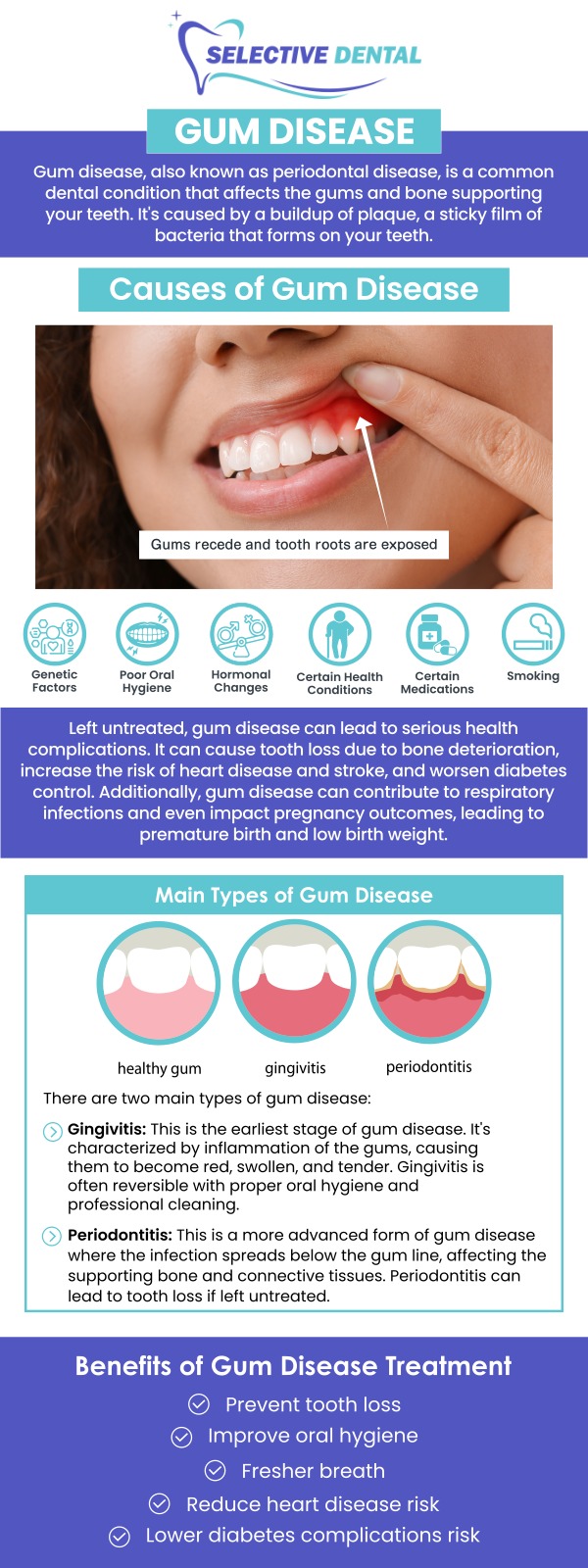
Table of Contents:
What are the signs of serious gum disease?
When should I be concerned about gum disease?
How fast does gum disease spread?
What are the stages of gum disease?
Can gum disease cause gums to pull away from the teeth?
Is bleeding every time I brush or floss normal?
Can persistent bad breath be related to gum disease?
Why do my teeth feel loose when I have gum problems?
Can gum disease change the way my teeth fit together?
Do I need a dental exam if my gum symptoms are mild?
How Can Dr. Victoria Vuong, DDS, and Our Team at Selective Dental Help With Gum Disease Symptoms?
What Financing Options Are Available for Gum Disease Treatment at Selective Dental?
What Languages Can Patients Use When Visiting Selective Dental?
Where Can Bay Area Patients Visit Selective Dental for Gum Disease Care?
Serious gum disease, known as periodontitis, can damage your teeth, gums, and overall health. Some signs of serious gum disease include:
• Bleeding gums – While mild gum bleeding during brushing or flossing is common, persistent or heavy bleeding can be a sign of serious gum disease.
• Painful chewing – If you experience pain while chewing, it could be a sign that gum disease has progressed and is affecting the bones that support your teeth.
• Persistent inflammation – Gum disease is an inflammatory condition that can result in chronic inflammation all over the body.
• Lingering bad breath – Bad breath that doesn’t go away with brushing or mouthwash is often a sign of gum disease.
• Receding gums – If your gums appear to be pulling away from your teeth, this could be a sign of serious gum disease.
• Changes in bite – If you notice a change in the way your teeth fit together when you bite or chew, it could be a sign of gum disease.
• Abscesses – A gum abscess is a pus-filled pocket that develops in the gums, often due to a severe gum infection. If left untreated, abscesses can be excruciatingly painful and result in tooth loss.
• Pus or discharge – If you notice pus or discharge around your teeth and gums, this could be a sign of a serious gum infection.
• Loose teeth – Advanced gum disease can make your teeth loose and eventually cause them to fall out.
Gum disease is a common oral health problem that, if untreated, can cause serious harm. Understanding the symptoms of gum disease will enable you to take appropriate action and seek treatment as needed. Gum disease often produces warning signs such as bleeding, swollen or tender gums, persistent bad breath, receding gums, loose teeth, and painful chewing.
It’s recommended to see a dentist for a proper diagnosis and treatment if you experience any of these symptoms. To stop gum disease from worsening and causing more harm to your teeth and gums, early intervention is crucial. Overall, being aware of gum disease warning signs and seeking treatment when concerns arise will help you maintain your oral health. Professional treatment can prevent serious complications that often arise from gum disease.
The severity of the condition, the patient’s general health, and oral hygiene practices are some of the key variables that affect how quickly gum disease spreads. Gum disease progresses gradually and is considered a chronic condition.
Poor oral hygiene often causes gingivitis, the first stage of gum disease, to appear within days or weeks. However, this condition can be treated with dental procedures and oral hygiene practices. Gingivitis can advance to periodontitis if untreated. This is a more serious form of gum disease that can permanently harm the gums and the structures supporting the teeth.
The progression of periodontitis usually takes months or years and can result in tooth loss and health complications if untreated. It’s important to remember that the progression of gum disease can be slowed or stopped with proper treatment and oral hygiene habits. Regular dental cleanings, scaling and root planing, and in certain cases, surgery, can help manage the disease and prevent it from spreading.
Gum disease progresses through several stages, which are:
• Gingivitis – Gum disease’s earliest stage is caused by plaque accumulation along the gum line. Red, swollen, and bleeding gums are some of the symptoms of this condition. At this stage, gum disease is typically reversible with improved oral hygiene practices and regular dental cleanings.
• Early periodontitis – Gingivitis can develop into early periodontitis if it is left untreated. At this point, the gums pull away from the teeth, forming pockets that can easily become infected.
• Moderate periodontitis – The pockets around the teeth deepen as the condition worsens, and bone loss may occur. Additionally, the teeth may shift and become loose.
• Advanced periodontitis – In the most severe stage of gum disease, significant bone loss has occurred, and teeth may need to be extracted. The gums recede further, and the teeth may become very loose or even fall out.
Frequently Asked Questions About Signs and Symptoms of Gum Disease
Yes. Gum recession can occur as periodontal disease progresses and affects the tissues surrounding the teeth. Receding gums may make teeth appear longer, expose sensitive root surfaces, and create areas where plaque can collect more easily.
Occasional minor irritation may occur, but gums that bleed repeatedly during brushing or flossing should not be ignored. Persistent bleeding can be associated with gum inflammation and may indicate that a dental evaluation is needed to check for gingivitis or periodontitis.
Yes. Persistent bad breath may be associated with bacterial buildup around the gumline or within periodontal pockets. If bad breath continues despite regular brushing, flossing, and tongue cleaning, a dental examination can help determine whether gum disease or another oral health concern is contributing to it.
Advanced periodontal disease can damage the tissues and bone that keep teeth securely supported. As this support decreases, teeth may begin to move, shift, or feel loose. Changes in tooth stability should be evaluated promptly by a dentist.
Yes. More advanced gum disease can affect the supporting structures around the teeth, which may allow teeth to shift and change the way the upper and lower teeth meet. A noticeable bite change is an important reason to schedule a dental evaluation.
Yes. Gum disease can sometimes progress gradually without significant pain, so even mild or recurring symptoms deserve attention. A professional examination can help determine whether symptoms are related to temporary irritation, gingivitis, or a more advanced periodontal condition.
At Selective Dental in San Jose, CA, Dr. Victoria Vuong, DDS, and our team evaluate symptoms such as bleeding gums, swelling, recession, persistent bad breath, tenderness, and changes in tooth stability. Dr. Vuong provides examinations and both routine and deep cleanings and guides patients toward appropriate dental care based on their individual needs. Our focus is on helping patients understand what their symptoms may mean, when treatment should be considered, and how ongoing oral hygiene can support healthier gums.
Selective Dental offers financing through CareCredit, LendingClub, and Sunbit to help eligible patients manage dental treatment costs. Promotional options may include 0% interest when qualifying balances are paid in full within 12 months, and established patients may also have the option to divide their co-pay portion into two or more interest-free payments. Our team can explain available financing arrangements based on the recommended treatment plan.
Clear communication can make it easier for patients to understand gum disease symptoms, recommended treatment, costs, and ongoing home care. At Selective Dental, our team can assist patients in English, Spanish, Chinese, Filipino, and Vietnamese, helping individuals and families from San Jose’s diverse communities feel more comfortable discussing their dental needs.
Selective Dental is located in the Evergreen community of East San Jose at 3151 South White Road, Suite 203, near South White Road and Aborn Road. Our office serves patients from Evergreen, Silver Creek, East Foothills, Mt. Pleasant, Alum Rock, Milpitas, Santa Clara, Campbell, Sunnyvale, Cupertino, Saratoga, Los Gatos, and surrounding Bay Area communities. The practice is accessible from major routes including Capitol Expressway, US-101, and I-680 and is near landmarks such as Evergreen Valley College, Evergreen Village Square, Lake Cunningham, and Eastridge Center.
For more information, contact us today or schedule an appointment online. We are conveniently located at 3151 South White Road, Suite 203 San Jose, CA 95148. We proudly serve patients throughout San Jose CA, the Bay Area and surrounding Santa Clara County—including Evergreen CA, Silver Creek CA, Berryessa CA, Alum Rock CA, Willow Glen CA and neighboring Milpitas CA, Santa Clara CA, and Campbell CA.

Check Out Our 5 Star Reviews


Additional Services You May Need
- Dental Implants
- Dental Bridges
- Dental Crowns
- Gum Disease Treatment
- Smile Makeover
- Root Canal Therapy
- Teeth Whitening
- Dental Cleanings
- Veneers
- Cracked Tooth Treatment
- Emergency/Same-Day Services
- General Dentistry
- Cosmetic Dentistry
- Family Dentistry
- Children Dentistry
- Aesthetic Dentistry
- TMJ Treatment
- Extractions
- Emergency Dental Appointments
- Mouth Guards and Night Guards
- Ortho Retainers
- Dental Implant Crowns
- Nitrous Oxide Sedation Dentistry
- Periodontal Evaluation
- Oral Cancer Screening
- Digital X-Rays
- Intraoral Camera Exam

Additional Services You May Need
- Dental Implants
- Dental Bridges
- Dental Crowns
- Gum Disease Treatment
- Smile Makeover
- Root Canal Therapy
- Teeth Whitening
- Dental Cleanings
- Veneers
- Cracked Tooth Treatment
- Emergency/Same-Day Services
- General Dentistry
- Cosmetic Dentistry
- Family Dentistry
- Children Dentistry
- Aesthetic Dentistry
- TMJ Treatment
- Extractions
- Emergency Dental Appointments
- Mouth Guards and Night Guards
- Ortho Retainers
- Dental Implant Crowns
- Nitrous Oxide Sedation Dentistry
- Periodontal Evaluation
- Oral Cancer Screening
- Digital X-Rays
- Intraoral Camera Exam


 Send Text
 How May I Help You?